Freight Billing Software: Essential Enterprise Features
A guide to the core freight billing capabilities high-volume transportation teams need to reconcile rates, accessorials, documents, exceptions, integrations, and customer requirements at scale.
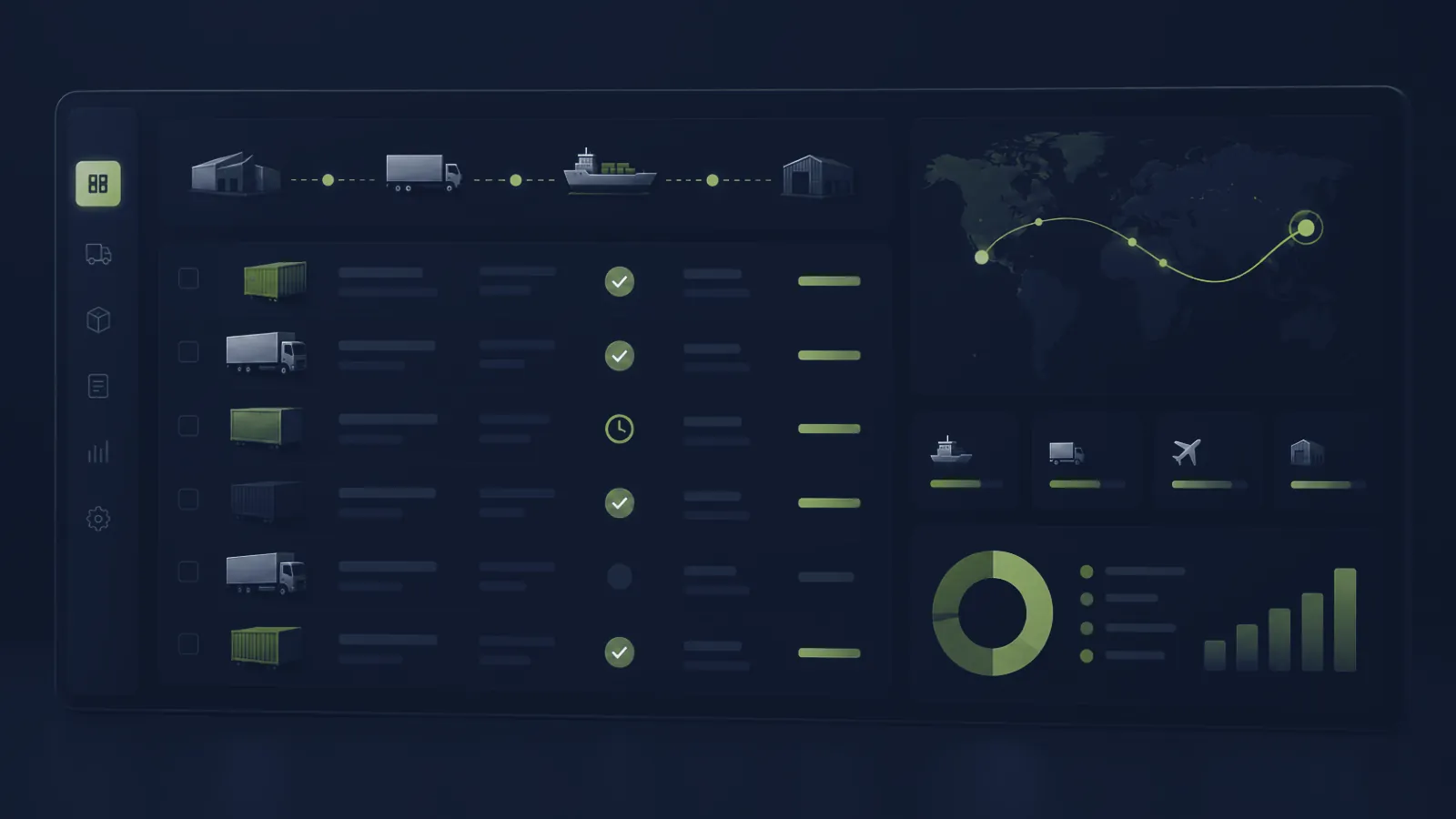
Freight billing software has to turn complex transportation activity into accurate invoices at scale. That sounds straightforward until one load contains a customer-specific freight rate, fuel surcharge, accessorials, proof of delivery, a rate confirmation, an exception approved in email, and a special reference required by the customer's accounts payable team.
High-volume operations do not need another invoice generator. They need a billing workflow that can reconcile those inputs, produce a defensible freight invoice, and move clean data into accounting and accounts receivable.
Required capabilities vary by business model—carrier, freight broker, 3PL, freight forwarder, or multimodal provider—but the core control problem is similar.
1. Contract and Freight Rate Validation
A freight billing system should know which rate applies to each shipment.
That includes:
- Base freight rate.
- Fuel surcharge.
- Customer-specific discounts or minimums.
- Mode-specific pricing.
- Effective dates.
- Spot or exception rates.
- Accessorial schedules.
The software should preserve the source rate and version. If a customer disputes the charge, the billing team needs more than the final number.
2. Accessorial Capture
Accessorial charges are one of the most common places for revenue leakage because they often arise after the original rate is agreed.
Freight billing software should connect operational events to the applicable commercial rule. Detention, layover, extra stops, driver assist, lumper fees, redelivery, and similar services should be billable only when the event occurred and the contract supports the charge.
The system should also flag a valid accessorial that occurred but was omitted from invoice generation.
3. Document and Evidence Management
Billing accuracy depends on documents.
Common records include:
- BOL or bill of lading.
- POD or proof of delivery.
- Rate confirmation.
- Customer contract.
- Receipts.
- Email approvals.
- Shipment exception records.
Document management should connect those records to the load and invoice. A reviewer should not have to search shared drives or inboxes for the evidence behind a line item.
4. Pre-Bill Invoice Audit
Invoice audit should occur before the customer receives the bill whenever possible.
The audit can check:
- Rate accuracy.
- Duplicate charges.
- Missing accessorials.
- Unsupported accessorials.
- Customer references.
- Document completeness.
- Calculation errors.
- Conflicts between system data and contract terms.
Traditional freight audit software is often associated with checking carrier bills after receipt. Freight billing software can apply many of the same controls upstream to prevent billing errors.
5. TMS, ERP, EDI, and API Connectivity
A high-volume transportation management system already holds much of the shipment record. The accounting system or ERP holds customer and financial data. EDI may carry tenders, shipment status, or invoice transactions. APIs can connect newer applications.
Freight billing software should work with those systems rather than forcing a rip-and-replace project.
Evaluate:
- TMS integration.
- ERP integration.
- EDI support.
- API access.
- CSV import and export.
- Accounting integrations.
- QuickBooks sync for applicable businesses.
- NetSuite or other enterprise accounting connectivity.
The goal is a consistent flow from operations to billing to accounting.
6. Customer-Specific Invoice Requirements
Enterprise shippers often require more than an amount due. An invoice may need a PO number, load reference, cost center, supporting POD, specific grouping, or another data element before the customer can process it.
A good system can enforce those requirements by account. That reduces payment delays caused by preventable formatting or documentation errors.
A customer portal can also help customers retrieve invoices and documents, but it should complement—not replace—correct invoice construction.
7. Dispute Resolution Workflow
Even accurate operations produce disputes. The software should make them easier to resolve.
A dispute record should include the disputed line item, customer reason, source rate, evidence, reviewer decision, adjustment, and final resolution.
That history matters because recurring disputes often reveal a contract or process problem rather than isolated customer behavior.
8. Accounts Receivable and Payment Tracking
Freight billing does not end when the invoice is sent.
Integration with accounts receivable can help teams track invoice status, due dates, payments, credits, and open disputes. Payment tracking makes it easier to separate a true collections issue from an invoice that is blocked by a billing question.
Accurate invoices can also support lower days sales outstanding and stronger cash flow by reducing the amount of time customers spend resolving discrepancies.
9. Audit Trail and Financial Controls
Every material change should be traceable.
The audit trail should show:
- Original data.
- Expected charge.
- Exception.
- Supporting evidence.
- User or automated action.
- Approval.
- Final invoice amount.
That record supports internal review, customer service, financial reporting, and revenue assurance.
10. Exception Routing and Role-Based Review
High-volume billing breaks down when every exception lands in the same queue. The software should classify the issue, assign it to the appropriate owner, and show the reviewer the evidence needed to make a decision. A rate discrepancy may belong with pricing, a missing POD with operations, and a customer-specific invoice requirement with billing.
Role-based access also matters. Users should be able to review, approve, or change only the records appropriate to their responsibilities, with each action captured in the audit trail. This keeps automation fast without turning exceptions into an uncontrolled manual process.
11. Automated Billing Without Blind Automation
Automated billing is valuable when it handles repeatable work. It becomes risky when the software hides exceptions or applies rules without the relevant commercial context.
High-volume operations should automate deterministic calculations and data movement while routing uncertain cases to human review.
The reviewer should see the evidence behind the exception, not a generic warning.
12. Revenue Leakage Analytics
Freight billing software should measure what the process is costing or recovering.
Useful analytics include:
- Missed charges identified before billing.
- Billing errors by customer.
- Write-offs tied to invoice disputes.
- Freight spend and billed revenue by mode.
- Accessorial capture.
- Invoice cycle time.
- DSO.
- Manual touches per invoice.
- Recurring root causes.
Those KPIs show whether automation is improving financial outcomes or simply moving invoices faster.
13. Support for Carriers, Brokers, 3PLs, and Freight Forwarders
Different transportation businesses create invoices from different operational relationships.
Freight brokers reconcile shipper revenue with carrier invoice costs. Carriers need to capture every valid service performed. 3PLs may manage multiple modes and customer contracts. Freight forwarders may combine transportation, documentation, and other services.
The billing platform should support those differences without losing the common requirement: every charge must connect to an agreement and a real operational event.
What Freight Billing Software Should Not Replace
The billing layer does not need to replace a mature TMS, accounting software, or ERP simply to improve accuracy.
The larger gap is often between those systems. The TMS knows what happened operationally. The contract contains the commercial rules. Email contains exceptions. The accounting system creates and tracks the receivable.
A strong freight billing workflow connects those sources.
Strengthen the Existing Billing Stack
Groundtruth is designed for enterprise transportation organizations that need to validate billing inputs before an invoice is sent. It connects agreements, communications, and operational evidence so teams can identify discrepancies without replacing core transportation management or accounting tools.
For high-volume operations, scale comes from reducing unnecessary manual review while preserving the evidence behind every exception. That is the standard freight billing software should meet.